A Soulslike is a game that meaningfully adopts the design language popularized by FromSoftware's Souls games rather than merely borrowing a dark setting or high difficulty. The label is useful because it describes a recognizable play loop: you enter dangerous spaces, learn enemy behavior through repeated attempts, make deliberate combat decisions, reach checkpoints that reset parts of the world, and improve both your character and your own understanding of the game.
There is no single official checklist. Even Steam's long-running Soulslikes curator describes the category broadly as games inspired by or inheriting mechanics from Dark Souls. That flexibility explains why arguments about the label never fully disappear. Some games are obvious fits; others borrow only a few ideas. For Soulslike Wiki, the goal is not to police a perfect definition. It is to make the criteria transparent enough that you can understand why a game appears in a collection.
The core Soulslike loop
The most useful definition begins with the relationship between risk, learning, and recovery. A difficult encounter matters because failure teaches you something and because the route back to the encounter has consequences. The player gradually converts information into progress: enemy wind-ups become readable, a dangerous room becomes a route you can execute, and a boss that initially feels chaotic becomes a sequence of recognizable decisions.
A typical Soulslike therefore combines several of the following systems:
- Deliberate combat. Attacks, dodges, blocks, parries, healing, and positioning carry meaningful commitment. Fast games can still be Soulslikes, but button-mashing is rarely the intended answer.
- Checkpoint-based progression. Rest points divide the world into dangerous runs. Reaching a new checkpoint changes how you think about the space around it.
- Resetting enemies. Resting or dying often repopulates ordinary enemies, which makes route knowledge valuable.
- Recoverable resources. Death may put currency, experience, or another resource at risk and create a decision about whether to return for it.
- Boss learning. Major encounters reward observation, timing, adaptation, and build choices more than raw stat advantage alone.
- Interconnected or layered level design. Shortcuts, loops, hidden routes, optional areas, and spatial memory often matter as much as map size.
- Build expression. Weapons, attributes, armor, abilities, spells, and consumables can change the way a challenge is approached.
Not every game needs every element. Sekiro: Shadows Die Twice, for example, does not center on the same build experimentation as Dark Souls, but its checkpoint structure, death pressure, demanding encounters, and mastery-driven boss fights place it in the same design conversation. Conversely, an action game can be extremely hard without feeling Soulslike if its progression, encounter structure, and failure loop are fundamentally different.
Difficulty is not the definition
The biggest misconception is that Soulslike simply means hard. Difficulty is common, but difficulty by itself tells you almost nothing about genre structure. A demanding rhythm game, tactical strategy game, or arcade shooter may be harder than many Soulslikes and still share very little with them.
What matters is what the difficulty asks you to do. Soulslike challenge usually encourages careful observation and repeatable improvement. The best encounters communicate enough information that a failed attempt can become useful. You may learn that an enemy delays the third swing of a combo, that greedily taking two attacks prevents a safe dodge, or that a particular route lets you reach the boss with more healing resources intact.
That is why the genre can support both brutal games and comparatively approachable ones. Accessibility options, generous checkpoints, flexible builds, summon systems, or an open world can reduce friction without automatically removing the Soulslike foundation. If you want a softer first step, our Soulslike games for beginners guide focuses on those differences rather than assuming every new player wants the same level of punishment.
Soulslike, Soulsborne, and FromSoftware games
"Soulslike" and "Soulsborne" are related but not interchangeable. Soulsborne is commonly used as a shorthand for FromSoftware's own Souls lineage, particularly Demon's Souls, the Dark Souls games, and Bloodborne. "Soulslike" is the broader comparative label used for games that inherit significant parts of that design language, including titles from other studios.
That distinction also prevents a strange problem: technically, Dark Souls is not "like Dark Souls"—it is the source text. Yet players understandably use "Soulslike" as a genre umbrella that includes the games that defined it. On this site, we use the umbrella term for discoverability while noting the difference when it matters. See Soulslike vs Soulsborne for the terminology in more detail.
What makes a game a strong fit?
For our database, a strong Soulslike fit usually has multiple reinforcing signals, not one superficial similarity. A game with stamina management, checkpoint resets, corpse recovery, deliberate melee combat, difficult bosses, and shortcut-heavy exploration clearly belongs in the conversation. A game with only dodge rolls and gothic monsters may be "Souls-inspired" without being a strong genre match.
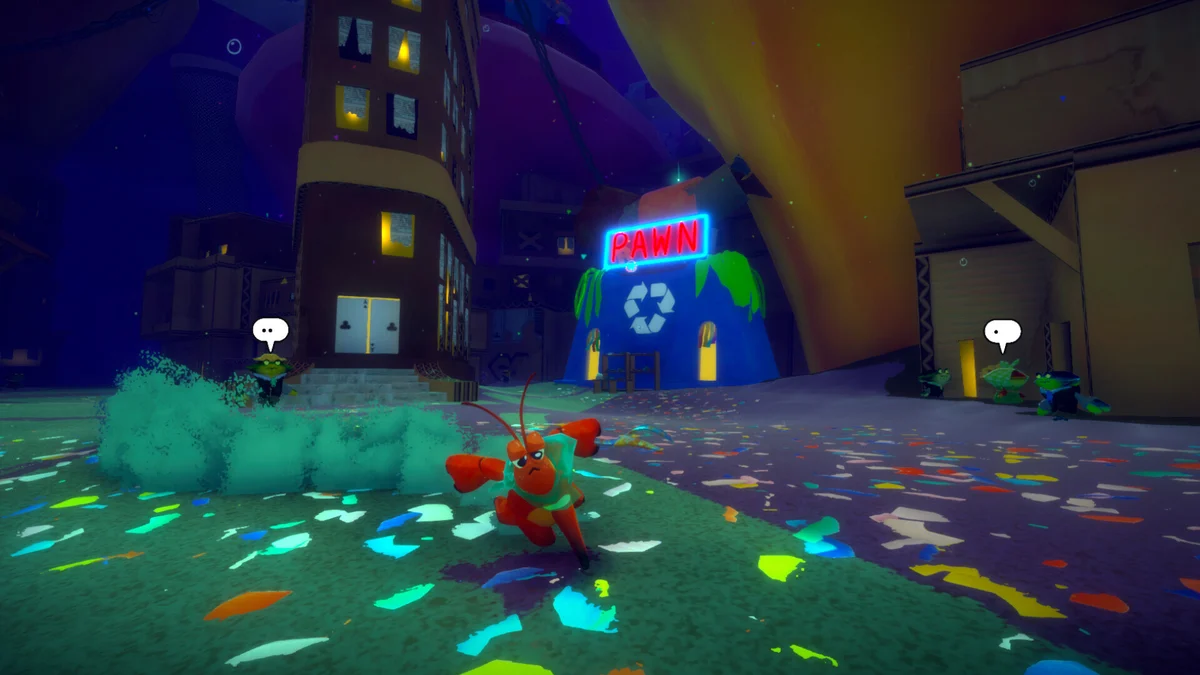
We also separate presentation from mechanics. Dark fantasy is common because Dark Souls and Bloodborne are influential, but visual tone is not mandatory. Another Crab's Treasure is intentionally colorful and comedic while its developer explicitly describes it as a Soulslike adventure. The important question is whether the systems produce the familiar cycle of danger, learning, adaptation, and earned progress.
Why the label stays fuzzy
Genres become messy when developers mix ideas. Modern action RPGs borrow parries, stamina, bonfire-like checkpoints, corpse runs, Metroidvania ability gates, roguelike run structures, and character-action combo systems from one another. A game may sit between categories instead of inside a clean box.
That is not a flaw in the term. It simply means a useful Soulslike database should expose the underlying features instead of pretending every entry is identical. Our Soulslike games database is designed around that principle, and collections such as 2D Soulslike games, open-world Soulslike games, and co-op Soulslike games let you start from the feature you actually care about.
If you are deciding what to play next rather than debating terminology, go directly to the best Soulslike games. The definition matters most when it helps you find a game whose combat, exploration, difficulty, and progression match what you want.