Soulslike and roguelike are often confused because both genres can make death meaningful. The similarity mostly ends there. A typical Soulslike asks you to return to a persistent world, recover lost resources, learn fixed encounters, and continue developing the same character. A traditional roguelike expects repeated runs through heavily randomized content where death may end the current character entirely.
Modern games blur the boundary, especially roguelites and Souls-inspired action roguelikes, but the underlying progression loops remain different enough that the labels should not be treated as synonyms.
The core difference
A Soulslike usually has a persistent authored world. Enemies and bosses have learnable placements and patterns. Death sends the player back to a checkpoint and may put currency at risk, but most character progression and world progress remain.
A roguelike traditionally emphasizes randomized environments, permanent failure, turn-based or tactical play, resource management, and repeated fresh runs. The 2008 Berlin Interpretation identifies random environment generation and permadeath among its high-value factors, along with turn-based, grid-based, non-modal gameplay and other traits.
Modern usage is looser than that traditional definition, which is why the word roguelite is often used for action games that borrow run-based structure, randomization, and permanent meta-progression without following every classic roguelike convention.
Death works differently
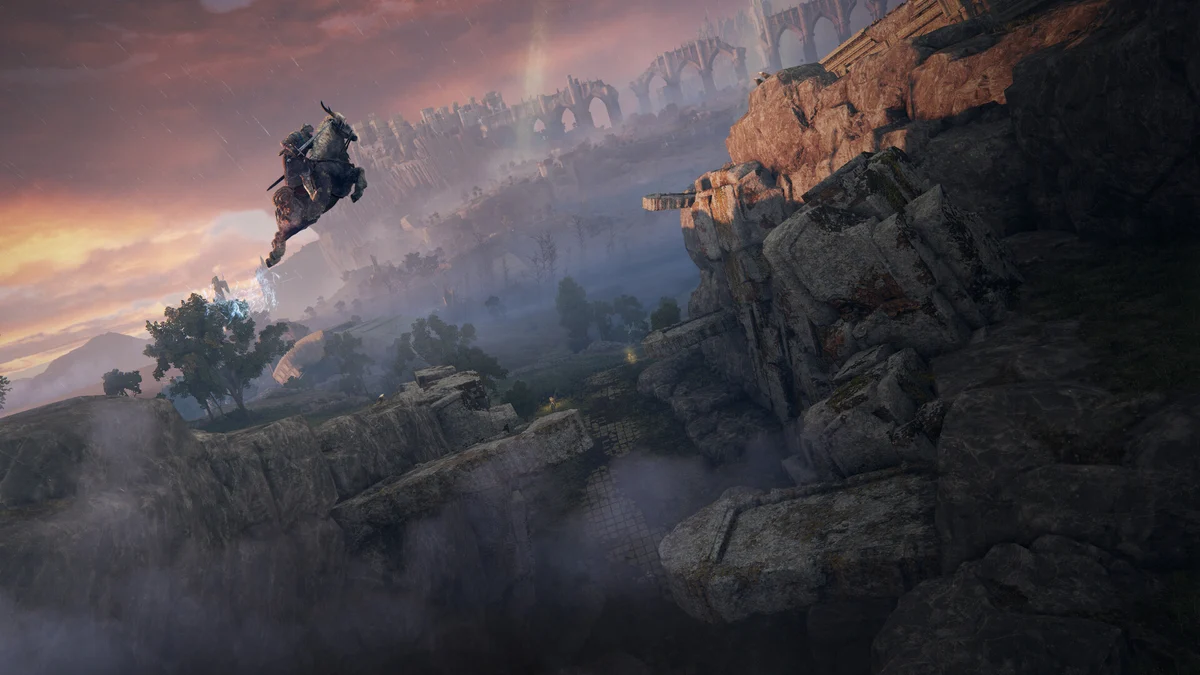
In Dark Souls or Elden Ring, dying usually means returning to a checkpoint and leaving recoverable currency where you fell. You may lose that currency if you die again before recovering it, but your character, equipment, major bosses, shortcuts, and broader campaign remain.
In a traditional roguelike, death can end the character or current run entirely. The next attempt begins from the start or from a fresh randomized state.
That difference changes the emotional meaning of failure. Soulslike death says, "You know more now; return to the same challenge." Roguelike death says, "Start a new run and adapt to a different set of circumstances."
Fixed worlds versus procedural worlds
Soulslikes usually benefit from authored geography. A shortcut is meaningful because the player remembers where it connects. An ambush becomes easier because the player remembers the enemy position. Boss mastery works because attack patterns can be studied repeatedly.
Roguelikes traditionally rely much more heavily on random or procedural generation. Replayability comes from not knowing exactly what map, item distribution, enemy arrangement, or resource situation the next run will produce.
This is a major structural difference. Soulslike mastery often means learning this world. Roguelike mastery often means learning the system well enough to survive many possible worlds.
Character progression versus run progression
Soulslikes normally let you improve one continuing character through levels, weapons, spells, upgrades, equipment, and story progress. Even after dozens of deaths, most successful progression remains.
Traditional roguelikes frequently reset far more after death. Modern roguelites complicate this by adding permanent meta-progression: new weapons, upgrades, characters, abilities, or resources may unlock between runs.
This is why Hades, Dead Cells, and many action roguelites feel different from Dark Souls even though both may involve repeated death. One loop centers on repeating runs; the other centers on pushing deeper into a persistent campaign.
Why people confuse them
Both genres reward player knowledge more than raw stats alone. Both can be difficult. Both can use scarce healing, dangerous exploration, build choices, and repeated attempts. Modern indie developers also intentionally combine the two.
A game such as Sharpest Spear can appear under both Souls-like and roguelike tags because arena survival, repeated runs, difficult combat, and Souls-inspired mechanics coexist. The correct description may genuinely be a hybrid.
The mistake is assuming one shared feature—usually death—is enough to make the genres equivalent.
Soulslike versus roguelite
In everyday modern usage, the more common confusion is actually Soulslike versus roguelite rather than traditional roguelike.
Roguelites often use real-time action, persistent meta-upgrades, procedural rooms, and repeated short-to-medium runs. They may borrow dodges, parries, stamina, or boss design from Souls games while keeping the run structure of a roguelite.
A useful test is to ask: after dying, am I returning to a checkpoint in the same world, or starting a structurally new run?
That single question does not classify every hybrid, but it quickly reveals which progression loop is dominant.
Can a game be both?
Yes. Genre labels describe clusters of design ideas, not mutually exclusive legal categories. A game can combine Soulslike combat with procedural levels, run resets, permanent upgrades, or randomized equipment.
When that happens, the most useful page should explain the hybrid instead of forcing it into one bucket. Players searching for Soulslike may care about deliberate combat and boss learning; players searching for roguelike may care about procedural replayability and run variety.
Which genre should you choose?
Choose a Soulslike if you enjoy learning a persistent world, mastering fixed bosses, developing one character, opening shortcuts, and returning to the same dangerous places with better knowledge.
Choose a roguelike or roguelite if you enjoy repeated fresh runs, adaptation to randomized conditions, experimentation with changing builds, and the possibility that failure substantially resets the current attempt.
If you want short free experiments that combine both traditions, the free Soulslike games and pixel-art Soulslike games sections are useful discovery points.
For the broader Souls definition, see what is a Soulslike.