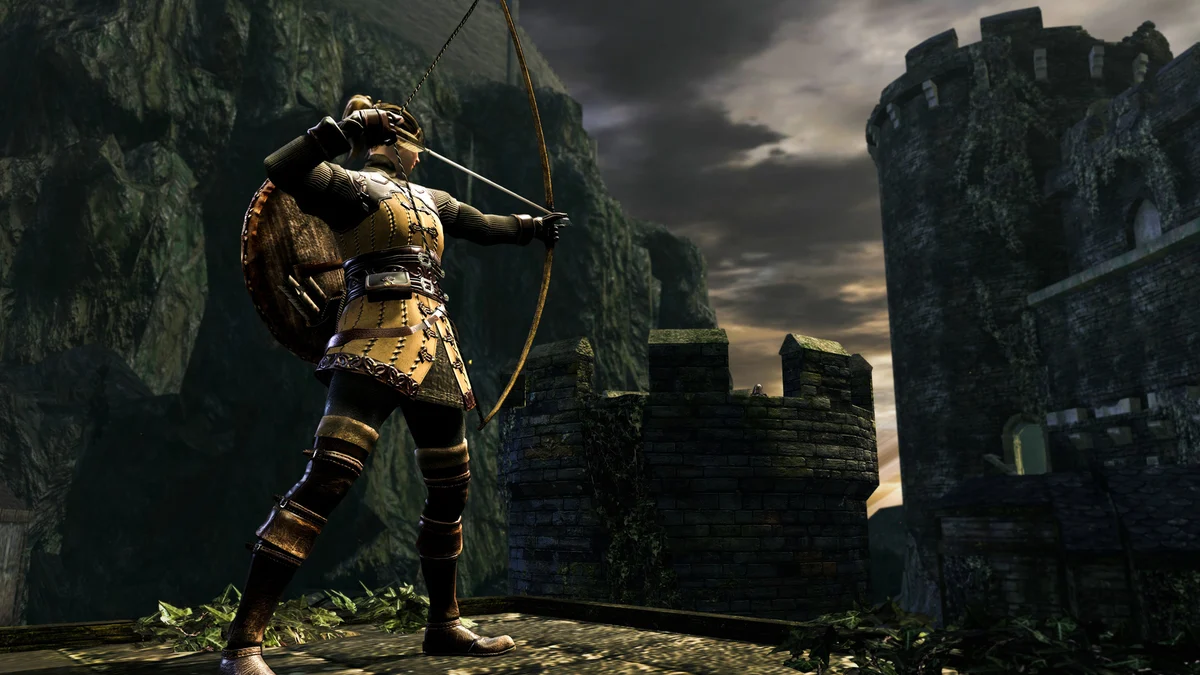
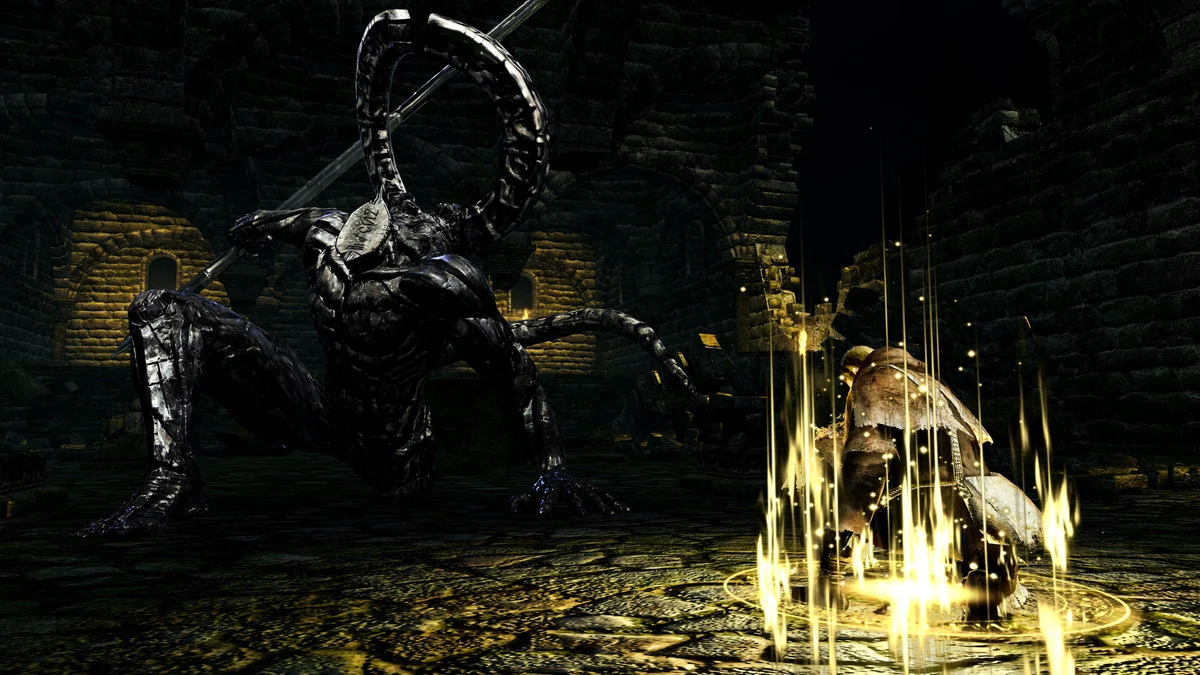
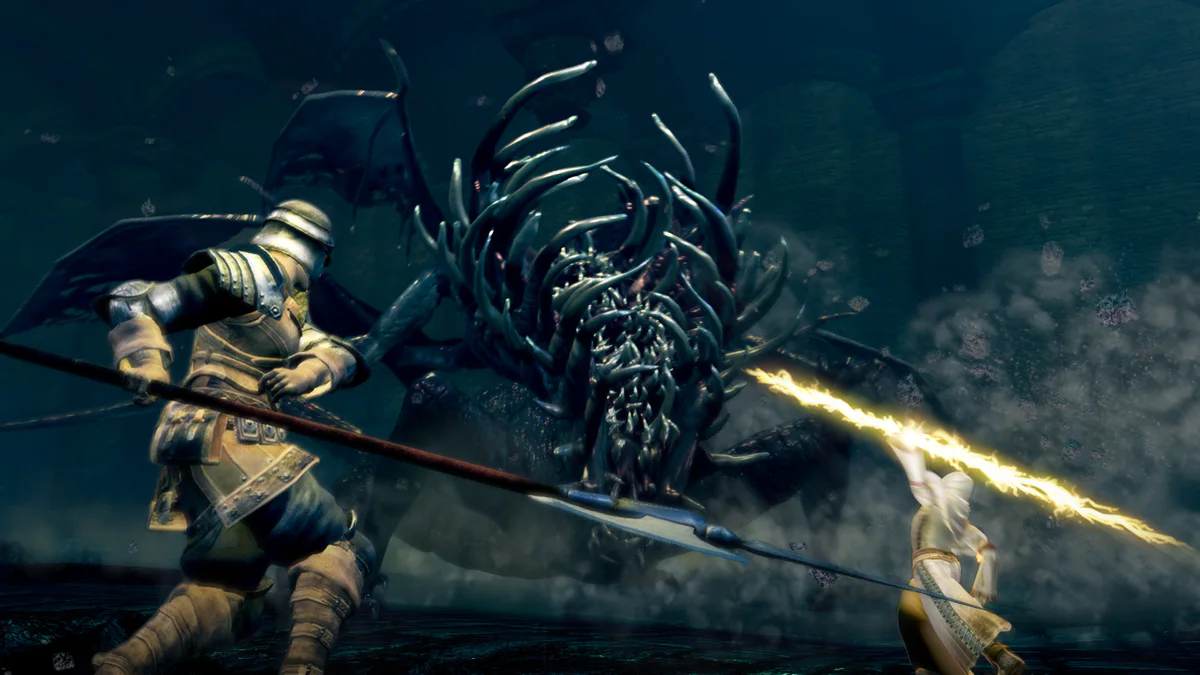
Dark Souls Remastered is the modernized version of the 2011 game that turned a specific FromSoftware design language into a genre reference point. Bandai Namco describes the remaster as the genre-defining game that started the Dark Souls journey, with high-definition presentation, 60 fps support on selected platforms, single-player, and online multiplayer with dedicated servers.
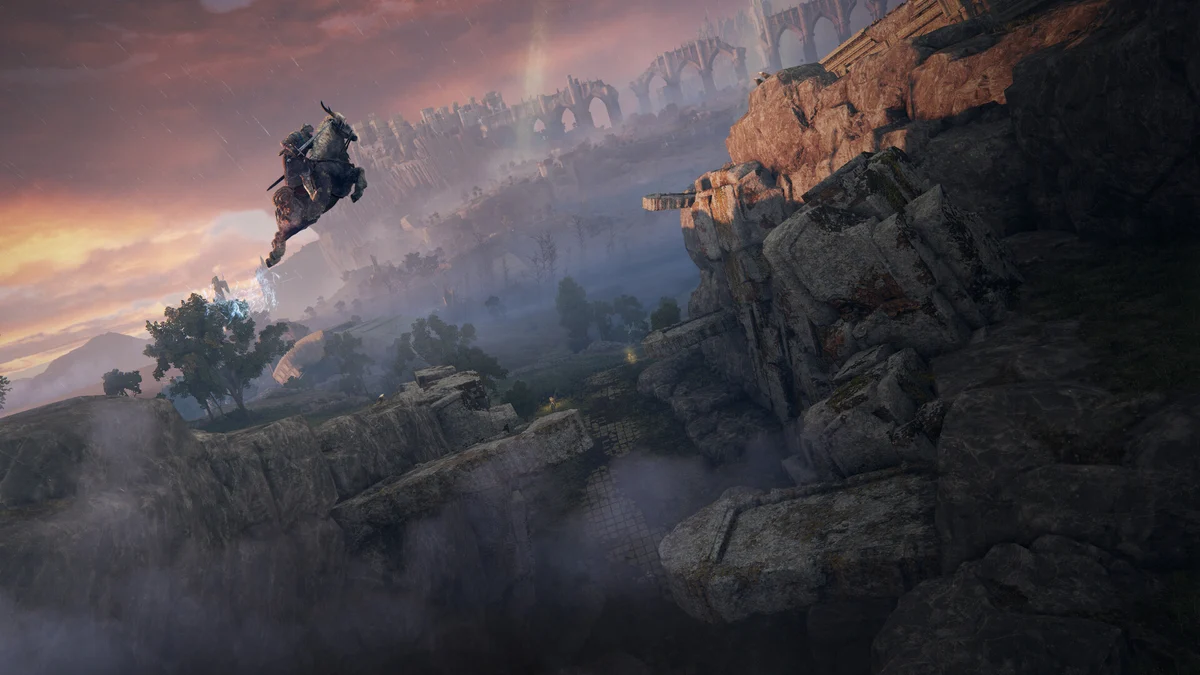
If Elden Ring shows how far the formula can expand, Dark Souls Remastered is the clearer place to study the foundations: deliberate melee combat, stamina management, bonfire checkpoints, recoverable souls, shortcut-heavy world design, cryptic NPC stories, build experimentation, and bosses that reward repeated learning.
Quick facts
- Developer: FromSoftware
- Publisher: Bandai Namco Entertainment
- Setting: Lordran
- Core structure: Interconnected action RPG world
- Modes: Single-player and online multiplayer
- Key systems: Bonfires, souls recovery, stamina, weapon upgrades, builds, invasions, summons
- Included content: The remaster includes the Artorias of the Abyss content
Why Lordran still matters
The most important feature is not a particular boss or weapon. It is the way Lordran teaches geography. Areas loop back into one another, locked doors become shortcuts, elevators reveal surprising connections, and routes that once felt long become manageable because the player understands the map better.
This creates a type of progression that is partly outside the character sheet. You may have the same weapon and level as before, but the world becomes less threatening because you know where the ambush is, which staircase reconnects to a bonfire, and which enemy can safely be ignored.
That spatial learning is one of the strongest reasons the game still matters to modern Soulslike design.
Combat: commitment, stamina, and spacing
Dark Souls combat is slower and more commitment-heavy than many later action games. Attacks have recovery, shields can be powerful, stamina governs offense and defense, and positioning matters because narrow spaces can make a strong weapon awkward.
The system encourages players to think before acting. Rolling repeatedly without reading an enemy can drain stamina. Swinging a heavy weapon at the wrong moment can leave you exposed. Blocking everything can lead to guard breaks. The game rewards timing and spacing more than constant aggression.
That slower tempo is exactly why some modern players prefer Sekiro or Nioh. If you want faster alternatives, our best Soulslike games guide separates recommendations by combat style.
Bonfires and the failure loop
Bonfires act as checkpoints, recovery points, and anchors for exploration. Resting gives safety but also repopulates ordinary enemies, turning each route into a small execution problem the player gradually masters.
Death usually leaves your collected souls at risk. Returning to the place you died can recover them, but dying again first means losing them. This creates a simple but effective tension: progress is not only about defeating a boss; it is also about deciding when to push farther and when to protect what you have earned.
This death-and-recovery pattern became one of the most recognizable Soulslike signals.
Builds and weapons
Dark Souls supports many weapon classes, armor weights, shields, magic schools, stat distributions, and upgrade paths. A beginner can approach the same area with a heavy shield and cautious melee, a fast dexterity weapon, sorcery, pyromancy, faith-based support, or hybrid choices.
The game does not explain every consequence clearly, which creates discovery but also friction. Modern Soulslikes often communicate scaling and respec systems more openly. Players who want greater flexibility with less opacity may prefer Elden Ring.
Online multiplayer
Bandai Namco's official description includes single-player and online multiplayer. The structure mixes cooperation and threat: players can summon assistance, leave messages, encounter ghosts, and engage with invasion systems rather than entering a conventional matchmaking lobby.
That model influenced many later games but is not equivalent to a seamless two-player campaign. If persistent co-op is your top priority, compare co-op Soulslike games before buying.
Is Dark Souls Remastered good for beginners?
It can be, but it depends on why you are starting. The game teaches the foundational ideas cleanly through level design and consequences, which makes it educational. At the same time, it has more friction than newer entries: limited explanation, longer boss runbacks in places, older interface assumptions, and fewer modern accessibility conveniences.
Choose it first if you want to learn the roots. Choose Elden Ring if you want more freedom to leave a difficult encounter. Choose Another Crab's Treasure if accessibility and communication matter more than historical context.
Our Soulslike games for beginners page compares those tradeoffs directly.
How is Soulsborne different from Soulslike?
Dark Souls is one of the source texts for the Soulslike label rather than simply a later game inspired by it. That is why terminology becomes awkward. Some players use Soulsborne to describe FromSoftware's own lineage, while Soulslike is used more broadly for games that inherit significant mechanics or structures.
See Soulslike vs Soulsborne for the terminology, and what is a Soulslike for the mechanical criteria we use across the database.
Who should play Dark Souls Remastered?
Play it if you value tightly connected level design, slower deliberate combat, meaningful shortcuts, experimentation, mystery, and the satisfaction of turning an intimidating world into familiar territory.
If you already know you want a similar game with more modern systems, go to games like Dark Souls. If you want a current cross-platform shortlist, start with best Soulslike games.