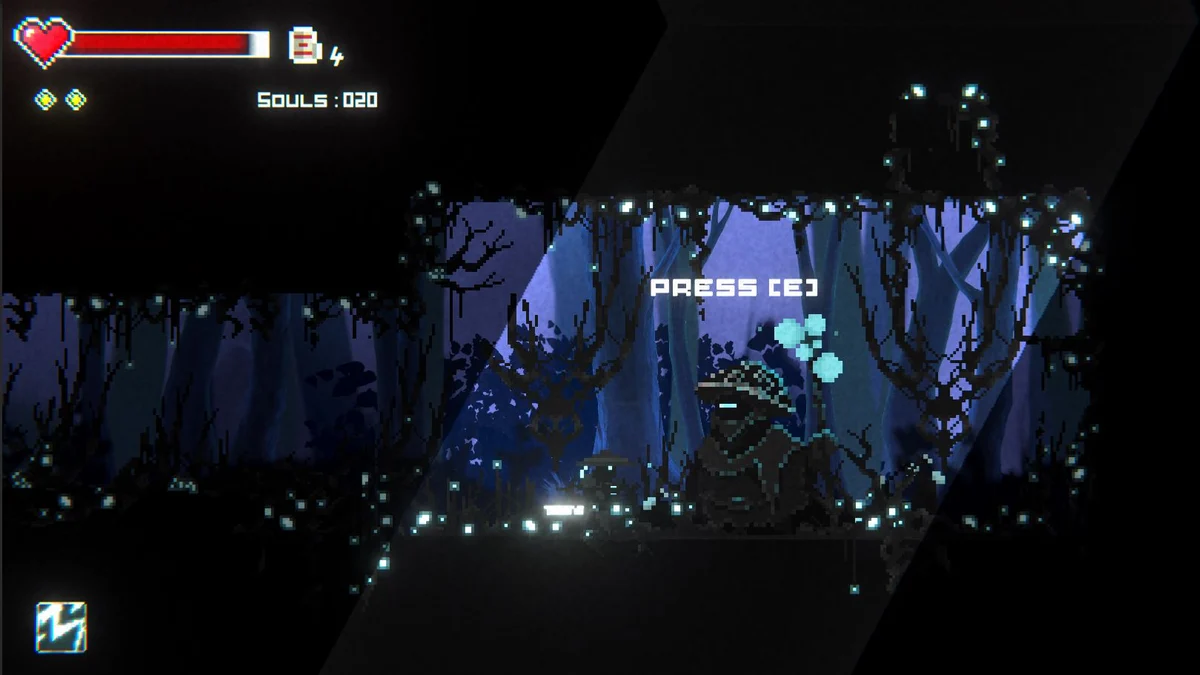
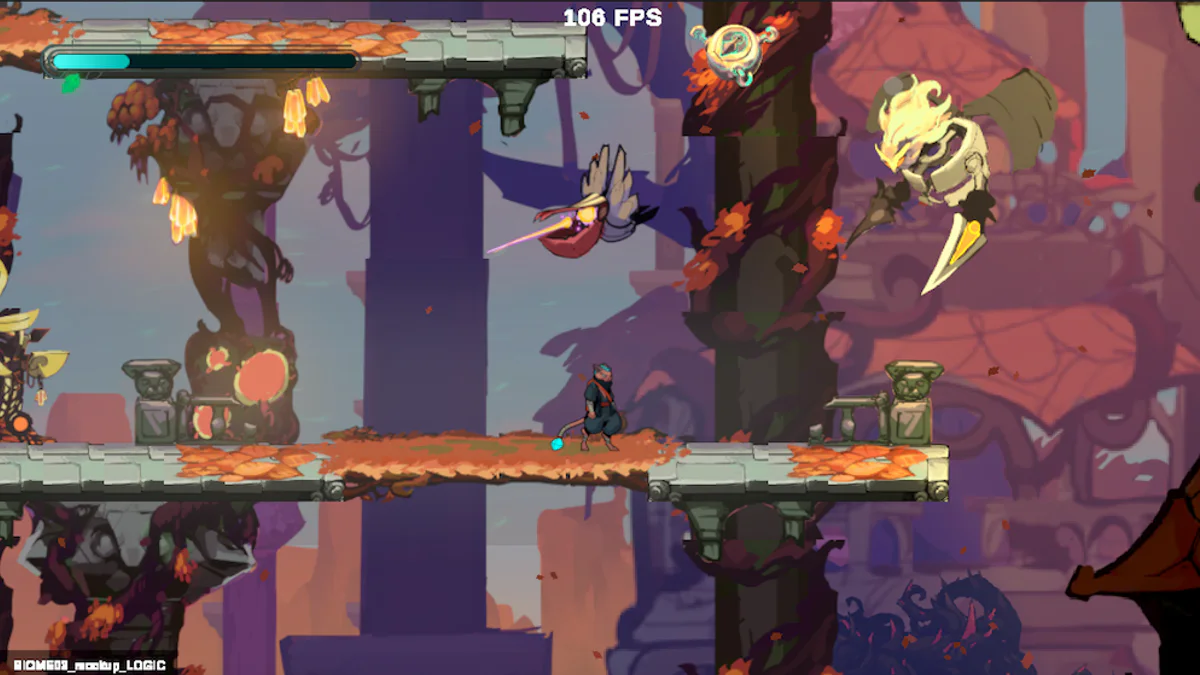
Kenzu: Shadow and Light is a useful browser pick for players who want a compact action-adventure with Metroidvania exploration, deliberate melee combat, parrying, bosses, upgrades, and build choices. The project page describes it as inspired by games such as Hollow Knight and Blasphemous, while itch.io also tags it as Souls-like. That makes it better understood as a hybrid: exploration and ability-gated progression are central, but combat asks for more attention than a typical run-and-jump platformer.
The game is still in development, so the most important thing to know before starting is that the browser version is not the final full campaign. The creator page identifies Kenzu as an in-development project, and recent development notes describe an expanding build rather than a finished release. Soulslike Wiki therefore treats this page as a guide to the currently available creator-hosted build, not as a review of a completed game.
Can you play Kenzu in a browser?
Yes. The official itch.io project page currently exposes an HTML5/WebGL build, and the developers also offer downloadable Windows, macOS, and Linux versions. On Soulslike Wiki, the Play area uses an official itch.io project widget only after you choose to load it; the actual playable runtime remains on the creator's page. If the widget does not load, the developer-page button remains the reliable fallback.
The developers explicitly recommend the downloadable version for the best visual-effects quality and gamepad compatibility. They also advise Chrome for a better browser experience with Xbox and PlayStation controllers, while warning that browser, operating-system, and controller differences can make gamepad behavior inconsistent. If you only want to sample the combat and exploration, the browser build is convenient. If you intend to play for a longer session with a controller, the downloadable build is the safer option.
Controls and the first things to learn
Kenzu can be played with a keyboard, and the official page lists the main actions clearly. Movement uses A/D or the arrow keys, Space jumps, Left Shift dashes, J attacks, and K parries. Additional tools such as the shuriken and kunai are tied to unlocks. R is used for concentration to heal, while M opens the map, E interacts, and Tab opens the menu.
For a Soulslike player, K is the important key to internalize early. The game is not just about crossing rooms quickly; enemy encounters become more manageable when you stop treating every threat like a platforming obstacle and start reading attack timing. A parry input changes the rhythm of a fight because it rewards waiting for a readable moment rather than attacking continuously. Dash is the other defensive pillar, especially when spacing is safer than trying to contest an attack.
The practical beginner lesson is simple: learn attack, parry, dash, heal, and map before worrying about every unlockable tool. That small core lets you understand whether Kenzu's combat loop works for you.
How the Souls-like influence shows up
Kenzu is not trying to reproduce Dark Souls one system at a time. Its structure is much closer to a 2D Metroidvania, but several design choices overlap with what Soulslike players often enjoy. The official page emphasizes increasingly challenging enemies and bosses, while the progression system includes weapons, skills, charms, and upgrades that can be combined into a personal build.
That build layer matters because it gives repeated encounters a purpose beyond mechanical execution. A new charm or weapon can change how aggressively you approach a room, how much you rely on parrying, or how safely you can recover after taking damage. The developers have also discussed expanding and rebalancing the charm system, so this is an area that may continue changing while the project remains in development.
Boss learning is another obvious point of overlap. Recent development notes mention additional bosses being built with distinct attack patterns. That makes pattern recognition, timing, and adaptation more important than simply raising damage numbers.
Exploration and progression
The game follows a cat warrior reconnecting with the legacy of the seven Kato clans in a world sliding into chaos. Exploration is organized around hand-painted biomes, hidden lore, NPCs, upgrades, and the gradual opening of new paths. Recent development updates describe redesigned rooms, new enemy animations, additional charms, and continuing work on new areas.
If you come to Kenzu from a 3D Soulslike, expect a different kind of spatial challenge. Instead of managing camera distance around a large arena, you are reading a side-on space: platform height, enemy placement, gaps, and the safest route through a room. The map is therefore not just a convenience. It helps you remember branches and return routes as abilities expand.
The creator originally launched the project with a smaller slice of content and has continued adding playable material. Because the game is still evolving, exact campaign length and room count should be treated as moving targets. Use the current creator page and devlogs for the latest scope rather than assuming an older launch figure still applies.
Browser performance and controller caveats
The browser build is a real way to try Kenzu, but it is not presented by the developers as the definitive version. WebGL can introduce controller compatibility differences and reduced visual fidelity compared with the native downloads. If inputs feel unreliable, first try a modern Chrome build. If that still does not solve the issue, move to the native version instead of assuming the game itself has broken controls.
That distinction is especially important for parry-heavy play. A small input problem matters much more when success depends on timing. Keyboard users avoid many controller-detection problems, so keyboard is a good baseline for testing the browser version.
Who should try Kenzu?
Kenzu is a strong candidate for players who like 2D exploration with combat that rewards timing, especially if Hollow Knight, Blasphemous, or other action Metroidvanias are already in your rotation. It is also worth sampling if you want a browser game with more progression than a short jam prototype.
It is a weaker match if you specifically want the classic 3D Souls formula, a finished campaign, or guaranteed browser-controller support. The project is still being built, and the developers are transparent about preferring the downloadable version for compatibility.
For more browser-playable options, return to the Play hub. If you are comparing the design language with the broader genre, read What is a Soulslike? and the 2D Soulslike games guide.
Quick verdict
Play the current browser build if you want to test Kenzu's movement, parry timing, boss-oriented combat, and Metroidvania progression without installing anything. Treat it as an evolving early build, keep the download option in mind for better controller behavior, and expect the balance and content scope to continue changing as development progresses.